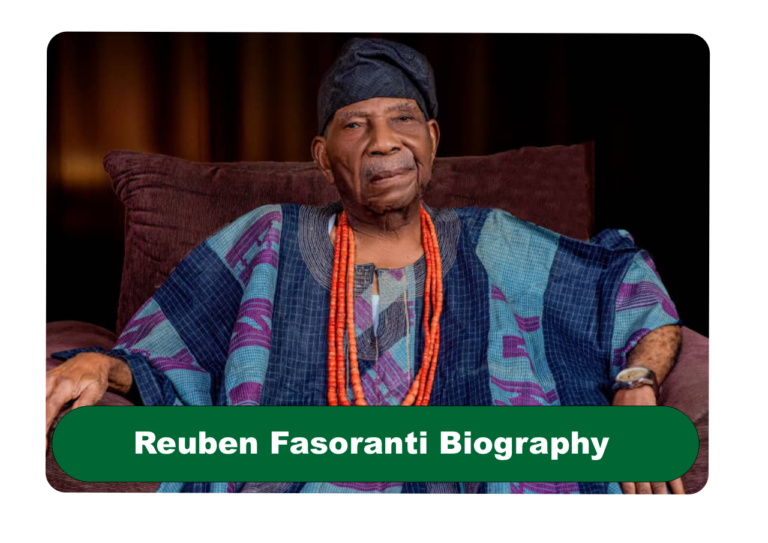
Reuben Fasoranti, former Afenifere leader, died at 100 on October 20, 2026. Explore his wife, children, education, political career and legacy in Nigeria.
Reuben Fasoranti was a Nigerian politician, educationist, elder statesman, and prominent leader of Afenifere, the Yoruba socio-political organisation. This Reuben Fasoranti biography explores his early life, education, wife, children, political career, and contributions to Nigerian democracy. He was widely respected for his association with Chief Obafemi Awolowo and his advocacy for good governance, federalism, and Yoruba interests.
Born on 11 May 1926, Fasoranti spent much of his life working as a teacher, school administrator, and political leader. He served as Ondo State Commissioner for Finance between 1979 and 1983 before becoming a major figure in Afenifere. Pa Reuben Fasoranti died on 20 October 2026 at the age of 100, just five months after celebrating his centenary.
Quick Facts About Reuben Fasoranti
| Detail | Information |
|---|---|
| Full Name | Reuben Famuyide Fasoranti |
| Date of Birth | 11 May 1926 |
| Date of Death | 20 October 2026 |
| Age at Death | 100 years |
| Birthplace | Uso, Ondo State, Nigeria |
| State of Origin | Ondo State |
| Nationality | Nigerian |
| Profession | Educationist, politician, and elder statesman |
| Wife | Frances Oladiwura Fasoranti (died 1991) |
| Children | Five |
| Education | University College Ibadan, University of Hull, Macquarie University |
| Political Affiliation | Action Group; Unity Party of Nigeria |
| Former Position | Ondo State Commissioner for Finance |
| Known For | Afenifere leadership and Yoruba political advocacy |
| Death Location | Ondo State, Nigeria |
Early Life and Family Background
Reuben Famuyide Fasoranti was born on 11 May 1926 in Uso, a community in present-day Owo Local Government Area of Ondo State. He grew up during British colonial rule, when educational opportunities were limited in many Nigerian communities. His early years were shaped by the social and economic conditions of rural southwestern Nigeria.
Fasoranti began his education in his hometown before moving to other communities for better schooling. His upbringing encouraged discipline, independence, and an interest in education. These values later became important aspects of his teaching career and political activities.
Reuben Fasoranti’s Education and Academic Qualifications
Fasoranti attended Ondo Boys’ High School before proceeding to Higher College, Yaba, in Lagos. He later studied English and Geography at University College, Ibadan, which subsequently became the University of Ibadan. His academic background prepared him for a professional career in teaching.
He continued his education abroad, obtaining a postgraduate qualification in education from the University of Hull in the United Kingdom. He also pursued a master’s degree in education administration and school management at Macquarie University in Sydney, Australia. These qualifications strengthened his knowledge of school leadership and educational development.
Teaching Career and Contributions to Education
Before entering politics, Fasoranti established himself as a teacher and school administrator. He taught at several schools, including Ondo Boys’ High School and Oyemekun Grammar School in Akure. His work focused on improving educational standards and encouraging discipline among students.
In 1957, he became the founding principal of Anglican Grammar School in Iju-Itaogbolu, Ondo State. He spent approximately fourteen years developing the institution and expanding its educational activities. His commitment to teaching earned him recognition within the surrounding communities.
Fasoranti also helped establish educational institutions, including Omolere Nursery and Primary School and Akure High School. He later founded St. Frances’ Academy in Igoba, Akure, in memory of his late wife. His contributions to education remained an important part of his life, even after retiring from active teaching.
Political Career and Relationship With Obafemi Awolowo
Reuben Fasoranti became involved in politics through his admiration for Chief Obafemi Awolowo, one of Nigeria’s prominent nationalist leaders. He supported Awolowo’s political philosophy, particularly its emphasis on education, social welfare, and regional development. His involvement began through the Action Group during Nigeria’s First Republic.
He later joined the Unity Party of Nigeria (UPN), which Awolowo led during the Second Republic. Fasoranti became an influential political figure in Ondo State and worked closely with other progressive politicians. His political activities focused on public education, economic development, and accountable leadership.
Ondo State Commissioner for Finance
Following the election of Chief Michael Adekunle Ajasin as Ondo State governor in 1979, Fasoranti was appointed Commissioner for Finance. He served in the administration until 1983, contributing to the management of government finances. The administration pursued policies aimed at expanding access to education, healthcare, and public services.
One notable episode involved the government’s takeover of privately owned schools under its education policy. Akure High School, which Fasoranti had helped establish, was among the affected institutions. He accepted the policy despite its impact on his personal interests.
His service as commissioner strengthened his reputation as a politician committed to Awolowo’s progressive ideals. Although he later withdrew from formal government positions, he remained involved in political discussions and national affairs.
Reuben Fasoranti’s Leadership of Afenifere
Fasoranti became one of the most prominent figures in Afenifere, a Yoruba socio-political organisation associated with Awolowo’s political tradition. The organisation advocates federalism, democracy, social justice, and the political interests of the Yoruba people. He remained active in its affairs during periods of military rule and democratic transition.
In 2008, Fasoranti succeeded Chief Abraham Adesanya as Afenifere’s national leader. His residence in Akure became an important meeting point for the organisation’s leadership. He regularly addressed issues involving national security, constitutional restructuring, and political accountability.
In March 2021, Fasoranti transferred leadership responsibilities to Chief Ayo Adebanjo, citing his advanced age. However, disagreements later emerged within Afenifere over political leadership and presidential endorsements. During the 2023 presidential election campaign, Fasoranti supported Bola Tinubu, while a faction associated with Adebanjo backed Peter Obi.
Despite these disagreements, Fasoranti remained an influential elder within Yoruba politics. His involvement in Afenifere connected him to several generations of political activism and discussions about Nigeria’s federal structure.
Reuben Fasoranti’s Wife and Children
Reuben Fasoranti married Frances Oladiwura Fasoranti, née Awosika, in 1955. The couple had known each other for several years before their marriage and shared an interest in education. His wife worked in the education sector and supported the establishment of schools.
Their marriage produced five children, including Olufunmilayo, Olufunke, and twins Taiwo and Kehinde. Their eldest daughter, Bunmi, died before her father. Frances Fasoranti died in 1991, and he chose not to remarry.
Fasoranti explained in interviews that he preferred to remain with his family rather than begin another marriage. He maintained close relationships with his children and grandchildren throughout his later years.
The Tragic Death of His Daughter Funke Olakunrin
One of the most painful moments in Fasoranti’s later life occurred on 12 July 2019. His daughter, Olufunke Olakunrin, was shot dead during an attack by armed men along the Ore road in Ondo State. She was travelling when the incident occurred.
Her death attracted national attention and renewed public debate about insecurity on Nigerian highways. Political leaders, community organisations, and members of the public expressed sympathy with the family. In June 2022, an Ondo State court convicted three men in connection with her murder and sentenced them to death.
Reuben Fasoranti’s Net Worth and Financial Life
Reuben Fasoranti earned income during his career as a teacher, school administrator, and public official. He was also involved in establishing educational institutions in Ondo State. However, his exact net worth was never publicly verified through reliable financial records.
Although he held influential positions, there is insufficient evidence to establish a dependable estimate of his personal wealth. His public reputation was primarily associated with education, political leadership, and community service.
Reuben Fasoranti’s Death at 100 in October 2026
Pa Reuben Fasoranti died on Tuesday, 20 October 2026, aged 100. Ondo State Governor Lucky Aiyedatiwa announced his death in an official statement, describing him as an elder statesman whose life was devoted to public service and the development of Nigeria.
His death came months after his 100th birthday celebration on 11 May 2026. President Bola Tinubu, who had earlier honoured Fasoranti during his centenary, expressed sadness at his passing. Other political figures and Afenifere representatives also paid tribute to his contributions.
His passing marked the end of a century-long life spanning colonial rule, Nigerian independence, military governments, and democratic administrations.
Legacy and Contributions to Nigerian Politics
Fasoranti’s legacy extended beyond his leadership of Afenifere. His contributions to education helped establish schools that served generations of students in Ondo State. His political career also connected him with important periods in Nigeria’s democratic development.
He remained associated with the political philosophy of Obafemi Awolowo and supported discussions about restructuring, federalism, and good governance. His long public career made him an important figure in the history of Yoruba political leadership.
Final Thoughts
Reuben Fasoranti’s biography tells the story of an educationist who became one of Nigeria’s respected political elders. His work in education, service in the Ondo State government, and leadership of Afenifere shaped his public life for several decades.
Although his death in October 2026 marked the end of his remarkable life, his contributions to education and political advocacy remain part of his legacy. His career illustrates the lasting influence of public service and commitment to community development.
Frequently Asked Questions
Q1: Who was Reuben Fasoranti?
Reuben Fasoranti was a Nigerian educationist, politician, and former national leader of Afenifere. He also served as Ondo State Commissioner for Finance between 1979 and 1983.
Q2: How old was Reuben Fasoranti when he died?
Reuben Fasoranti was 100 years old when he died on 20 October 2026. He was born on 11 May 1926 in Uso, Ondo State, Nigeria.
Q3: What caused Reuben Fasoranti’s death?
His death was announced by Ondo State Governor Lucky Aiyedatiwa on 20 October 2026. A specific medical cause of death was not confirmed in the official announcement.
Q4: Who was Reuben Fasoranti’s wife?
His wife was Frances Oladiwura Fasoranti, whom he married in 1955. She died in 1991, and he did not remarry.
Q5: How many children did Reuben Fasoranti have?
Reuben Fasoranti had five children with his wife, Frances. His children included Olufunmilayo, Olufunke, Taiwo, Kehinde, and his late eldest daughter, Bunmi.
Q6: What was Reuben Fasoranti’s net worth?
His exact net worth was not publicly verified. He earned income through his work in education and public service, but reliable estimates of his personal wealth are unavailable.
Q7: What was Reuben Fasoranti known for?
He was best known for leading Afenifere and supporting the political ideals of Chief Obafemi Awolowo. He also contributed to educational development and served as Commissioner for Finance in Ondo State.